
Biology
Lifespan: 15-40 years
Average # of offspring: 2-3
Range & Habitat
Habitats: Mangrove, Rivers (occasionally), coastal areas, estuaries,
Food & Function
Lifestyle: Semiaquatic, Social, Pelagic
Ecological Roles: Fish Population Indicator.
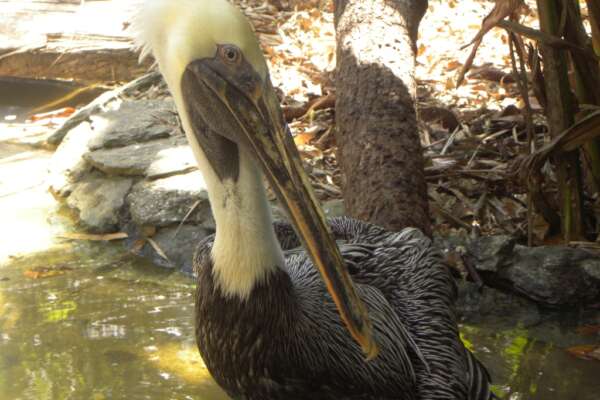
Brown Pelican
(Pelecanus occidentalis )
Brown pelicans are the only species of pelican that is native to Belize. They are very social, and live throughout the year in flocks. They are diurnal but sometimes forage at night during a full moon. Brown pelicans sleep on land either while standing on both their feet or resting on their breast and belly, their head sideways on their shoulder with their beak tilted towards the side. This is the only pelican species that dives from height as the main method of obtaining food. They do not swim under the water but plunge their head below the surface when catching prey.
Brown pelicans are monogamous, which means they mate with one partner for only one breeding season. The breeding season is in spring in the parts of the range in the north, but all year round in the Neotropics. They breed in colonies, and sites are sometimes maintained for several years.
Brown pelicans do not have many natural enemies. Although nests on the ground are sometimes destroyed by flooding, hurricane, or other natural disasters, people pose the biggest threat to pelicans. In the early 20th and late 19th centuries, pelicans’ feathers were sought after to adorn women’s clothing, especially hats. Today tourists and fishermen threaten them by disturbing their colonies, especially in Mexico.
Fun Facts
- Brown pelicans do exercises, including stretching and turning their pouch inside out to maintain its flexibility
- Their air sacs enable buoyancy for them in the water
- Brown pelicans are the only type of pelican that dive in order to catch prey. They glide low above the water and when they see a fish they fly to a height of 30 ft, fold their wings back, and plunge down into the sea
Belize Zoo Trivia
- The Belize Zoo has 4 pelican residents who are unfit to go back into the wild. They are Pedro, Peli, Wingy, and Zippy. These pelicans have missing parts of their wings and beaks as a result of injuries. Some were caused by people who believed the pelicans were stealing their fish.