
Biology
Height: 13 inches
Weight: 9 oz - 16 oz
Lifespan: 15+ years
# of offspring: 2-4
Range & Habitat
Habitats: Farmlands; grasslands; woodland edges; urban areas
Food & Function
Lifestyle: Nocturnal
Ecological roles: Population control.
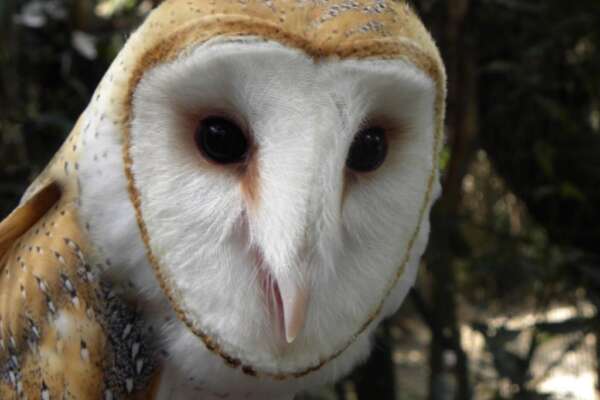
Barn Owl
(Tyto alba)
Spanish: Lechuza. Maya: So’och
Barn owls are one of the most widely distributed birds in the world, occurring everywhere except in deserts and arctic regions. They thrive in urban areas and communities, often occupying roofs, attics, and barns, hence their name.
Barn owls are mostly nocturnal, but can easily hunt and travel during the day; their eyes can adjust to bright light better than those of humans. The position of their ears and shape of their face and facial feathers give them the best hearing of all owls, which they use to hunt their preferred prey: rodents.
They hunt more rodents than any other predator; a hungry barn owl can eat 2-4 daily, and a nesting pair with their young can eat over 1,000 rats a year. Breeding normally occurs between March and May, but can occur twice a year if there is enough food (more rats= more barn owls).
Despite their global distribution, barn owls are in decline due to poisoning, predation, and flying into vehicles or infrastructure (e.g. power lines). Even though their lifespan is more than 15 years, their actual life expectancy in the wild is no more than 4-6 years.
Fun Facts
- Barn owls do not hoot like regular owls; they can only screech and hiss to communicate
- Owls have 14 vertebrae in their necks, compared to the 7 that humans have. This allows them to twist their heads around to 270 degrees
- Barn owls are able to locate and catch prey in total darkness by hearing alone, and can even hear prey under the ground or under snow
- Their feathers are very soft with small ridges that give them silent flight
- Owls eat their prey whole and cast a pellet, which has remnants of hair, bone etc
Belize Zoo Trivia
- The best time to see our barn owls active is during a Nocturnal Tour of the Zoo
Conservation Efforts
Some cultures in Belize believe that the screech of a barn owl is a bad omen; it may announce that someone in the household will get sick or die. As a result, some people persecute barn owls out of fear and misunderstanding.
The Belize Zoo has conducted awareness campaigns to dispel the myths about barn owls through ambassador owls to outreach events, and the creation of educational books and posters. “Words of Wisdom from Happy the Owl,” was written by Founder Sharon Matola as part of these campaigns, and is available in the Belize Zoo’s Gift Shop.